

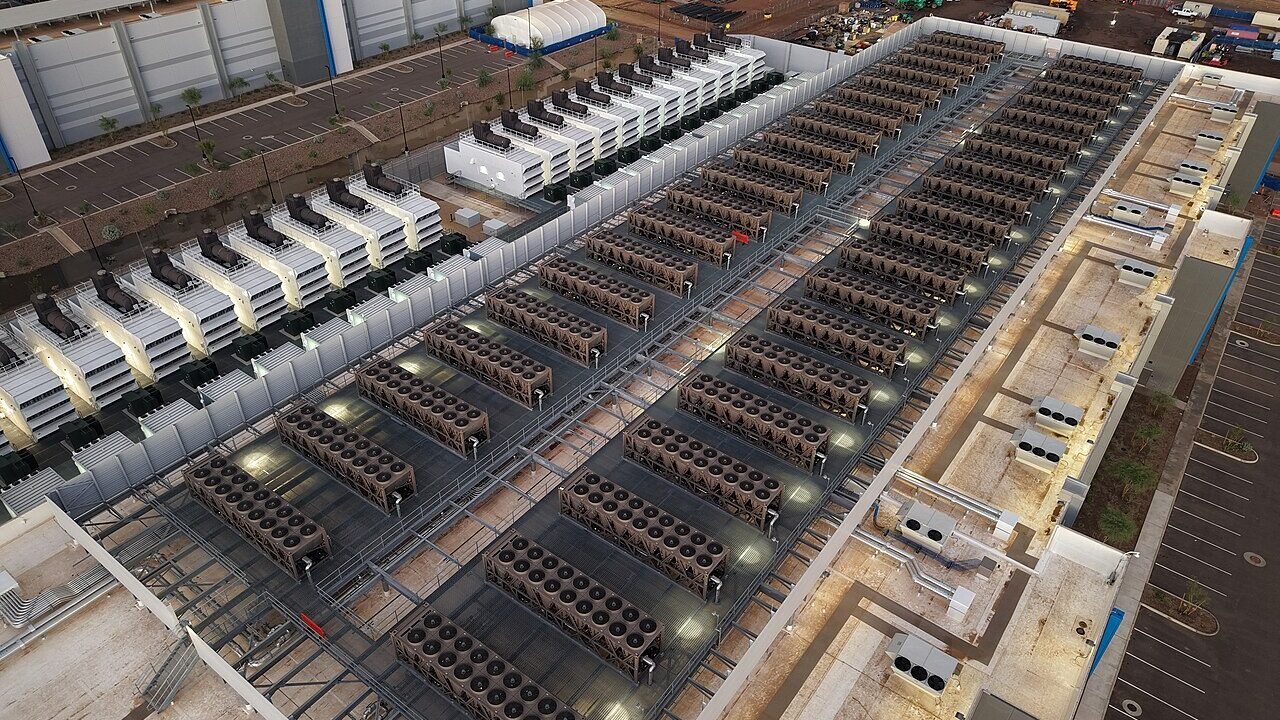
The 2026 US midterm elections were about more than the usual mix of the economy and party loyalty. In many places, voters also had a view on data centers, the big buildings full of computers that run AI services and much of the internet. Reports from CNBC, Wired and TechCrunch describe a similar pattern: on 3 November, data centers were a live political issue, and candidates who opposed unchecked building often did well.
This explainer walks through what happened, why a technical piece of infrastructure became a campaign topic, and what could come next. It also points out where the evidence is less certain, because election results are easy to over-read.
Also read: Google says schools can turn AI and Search on after backlash
What actually happened on election night
CNBC reports that 41 local ballot measures linked to data centers were put to voters in 10 states, citing Ballotpedia, a site that tracks elections. A ballot measure is a question put straight to voters, often at county or town level, such as whether to ban a type of project or add a review step before it can go ahead.
Based on an analysis by Ballotpedia plus extra results CNBC gathered, voters sided with limits, or turned down pro-development proposals, in almost every contest where results were known by Wednesday. The single exception was Harwood, North Dakota. There, voters declined to add an extra review for industrial projects, a category that includes data centers. Ohio alone had 21 of the measures. Communities in California, Florida, Illinois, Kansas, Maine, New Jersey, Nevada and Wisconsin also voted.
Wired describes the results slightly differently. It says that in nine states, voters turned down planned construction, approved moratoriums (temporary bans) and asked for more consultation with, and accountability to, local communities. Wired also cites Brad Carson, president of Americans for Responsible Innovation, who said only one county appeared to have opened the door to more development. The sources differ on whether the count was nine or ten states, but they agree on the direction.
Also read: Binance says fake job interviews helped hackers steal $6.3bn
Why data centers, and why now?
Data centers are not new. What has changed is their scale and the reason they are being built. TechCrunch reports that these facilities now hold the computers behind AI, and that building them has become entangled with public worries about the technology itself.
TechCrunch’s reporting points to several specific complaints.
- Environmental impact. People worry about pollution. TechCrunch highlights xAI’s data center in Memphis, Tennessee, and data centers across Virginia, where gas turbines supply power.
- Electricity costs. Many residents fear that the bill for upgrading the power grid for huge new sites will be passed to ordinary households through utility charges.
- Lack of say. TechCrunch says vague or outdated zoning rules, and requirements that local officials sign non-disclosure agreements (NDAs, which stop them discussing projects), have added to the anger. It gives the example of Amazon building a data center in Gilroy, California, with few residents aware, by meeting the terms of a 45-year-old zoning law.
- Tax breaks. Data centers have received billions in tax breaks. TechCrunch says tech companies point to jobs and community programmes, but for many people that was not enough.
Behind these practical complaints there may be a broader feeling. TechCrunch quotes a private equity executive who said people do not necessarily hate data centers but rather AI, and that the buildings have become a stand-in for fears about the technology. Alexander McCoy, a Democratic strategist working on AI, told Wired something similar: even if energy, noise and pollution worries were addressed, many voters would still be concerned about what the projects make possible, including effects on jobs, prices and society.
How big a factor was it for voters?
The polling numbers need careful reading, because the sources report them in different ways.
TechCrunch cites an NBC exit poll in which almost 60% of respondents called data centers a crucial or major influence on how they voted. In the same poll, more than half believed AI would do more harm than good, and almost 80% opposed data centers being built near their homes. The CNBC Voter Poll reported that 56% of those asked gave data centers the same weighting, and found Democrats rated the issue as more important than Republicans did.
Wired, also citing NBC News, gives a finer breakdown: almost a quarter of voters called data centers crucial, while nearly two-thirds said they were a major or minor factor. These figures are not necessarily in conflict, since they group the answer options differently. Together they suggest the issue mattered to a large share of voters, though only a minority ranked it as the single decisive factor.
Where it hit hardest: Ohio, Texas and beyond
Ohio was a focal point. CNBC reports that Democrat Sherrod Brown ousted Republican Sen. Jon Husted after portraying him as the face of data centers. Wired adds that Brown had run ads for months making that argument. CNBC also says Democrat Amy Acton, a physician, beat Republican businessman Vivek Ramaswamy for governor. Acton backs what CNBC calls a conditional moratorium, meant to ensure data centers cover 100% of utility costs and use only union labour.
That matters because of what is planned in the state. CNBC says OpenAI announced in August that it had secured 8 gigawatts of computing power at the PORTS-Pike Technology Campus, which the company calls the largest AI data center campus in the planning stage anywhere. SoftBank and SB Energy are developing it with the US Department of Energy, and Nvidia is acting as a financial backstop for a project whose total cost could pass $500 billion. A gigawatt is a unit of power, roughly the output of a large power station. According to the project’s website, the first building phase is due to start this year, with capacity arriving in stages from 2028.
TechCrunch also reports that a county in Ohio has passed a ban on data centers, after Meta had drawn up plans for a 700,000-square-foot facility there. It also reports that analysts at Morgan Stanley see Acton as a major risk to the state’s buildout.
Texas produced one of the biggest upsets. CNBC reports that Democrat Gina Hinojosa unseated Gov. Greg Abbott after blaming him for the fast spread of data centers and arguing that he favoured the tech industry over local communities. CNBC notes that Texas is heading towards being the largest data center market in the world by 2030. TechCrunch says both Hinojosa and Abbott had backed some limits, yet Hinojosa made opposition to data centers central to her campaign, which stands out in a state whose electricity grid has been shown to be fragile over the last ten years. Wired reports that Democrat Keisha Lance Bottoms won the governorship in Georgia on a platform that included data center moratoriums, and that Democrat Cindy Holscher was close to a possible win in Kansas.
Other races also featured the issue. Wired describes House contests in Ohio and Wisconsin in which Democrats gave their Republican opponents nicknames built around data centers. TechCrunch lists Texas, Maine, Michigan, Nevada, Georgia and South Carolina as states where candidates who took a stance against rapid buildout won seats.
Money did not decide it
One striking detail is how much industry money was spent on the other side. Wired reports that in South Carolina, an industry super PAC (a group that can raise and spend large sums to influence elections) called Building the Future spent $1.5 million to support Republican Darline Graham, who lost to Democrat Annie Andrews, who favours a moratorium. The same group put more than $1.5 million into the Kansas governor’s race to back Republican Ty Masterson.
CNBC says that, in its analysis of Federal Election Commission records, crypto, AI and online gambling interests put in more than $377 million. It also reports that Elon Musk, the largest individual donor of the cycle, contributed no less than $474 million, close to half of that sum going to Texas, and that both of the state’s headline races ended in the opposite result to the one he backed. TechCrunch quotes researcher Aniketh Koneru as saying money does not buy outcomes, and that creating a local villain can build campaign momentum.
Wired adds a caution: simply being against data centers did not guarantee a win. Several Republicans who attacked Democrats over the issue still lost, including Tom Tiffany in Wisconsin. In a year Wired describes as a blue tsunami, the data center issue was one factor among many, and the sources do not show how much of any single result it explains.
What could happen next
With Democrats now controlling Congress and Republicans holding the White House, TechCrunch says the government could be one of the most divided of the decade. It lists several possible developments.
- More local limits. TechCrunch says likely next steps include more construction moratoriums and rules that make data centers fund their own grid upgrades. Maia Woluchem of the research group Data & Society expects more movement at state and local level whatever happens federally.
- Construction delays. TechCrunch reports that Goldman Sachs predicts delays in states such as Georgia and Texas because of Democratic gains.
- Federal bills. A bill from Sen. Bernie Sanders and Rep. Alexandria Ocasio-Cortez would pause all new data centers across the country until Congress sets safeguards. Another, the GRID Savings Act from Sen. Martin Heinrich, would stop grid costs falling on communities. TechCrunch notes any such bill could face a veto.
- Tougher oversight. Wired quotes McCoy as expecting an end to favourable tax breaks, more scrutiny from regulators and stronger enforcement of environmental rules. CNBC reports that Rep. Greg Casar, who chairs the Congressional Progressive Caucus, said AI company chief executives should be summoned to testify under oath.
There are also signs of an industry response. Wired says The Hill had reported on the day of the midterms that environmental groups and large tech firms were cooperating in a group called the Responsible Data Center Development Collaborative, aiming to draw up a framework for development. Musk, meanwhile, posted on X that data centers in space looked appealing.
The limits of what we know
The fight is far from settled. TechCrunch quotes Nadine Smith, president and CEO of Color of Change, as saying that a blanket freeze is disputed even within the Democratic party, because some members fear it might slow AI development and weaken national security. Supporters of the buildout argue that the infrastructure is essential for the US to stay ahead of rivals such as China.
Markets are also part of the picture. CNBC says investor enthusiasm for AI was already weakening before the election, with companies tied to data centers sold off in October amid worries about rising interest rates and overspending. It adds that Alphabet, Amazon, Microsoft and Meta each spend hundreds of billions of dollars annually on AI infrastructure, which they say reflects huge demand, and that all but Microsoft have turned cash flow negative.
Finally, some results were not final when these reports were written. Wired notes that a few races had been claimed by candidates but not yet called by the Associated Press, so details may change.
How to read the story
For a non-expert, the main lesson is that infrastructure decisions are no longer seen as purely technical. Where a data center goes, who pays for its power and who is told in advance are now questions voters raise at the ballot box. The sources suggest this is partly about practical matters such as bills, air quality and zoning, and partly about wider unease over AI.
It is also worth remembering what the evidence cannot show. Polls and ballot results show strong local opposition, but they do not prove that building will stop, and the sources point to disagreement even among Democrats. How the new Congress, state governments and the industry respond will decide whether this early reaction becomes lasting policy.
Frequently asked questions
What is a data center?
A data center is a large facility filled with computers that store data and run online services. TechCrunch notes that today they also house the computers that power AI.
Did voters reject data centers everywhere?
Not quite everywhere. CNBC reports that voters sided against data centers or backed restrictions in every measure with results available except one, in Harwood, North Dakota. Some results were still unconfirmed when the reports were written.
What is a data center moratorium?
A moratorium is a temporary pause on building new projects. Several winning candidates, and a proposed bill from Sen. Bernie Sanders and Rep. Alexandria Ocasio-Cortez, call for pauses until stronger rules are in place.
Will data center building stop now?
The sources do not say that. They suggest more delays, local limits and scrutiny are likely, but TechCrunch notes that bills face a possible veto and that even some Democrats contest a blanket freeze.
Why it matters
Data centers sit behind AI tools many people use every day, so decisions about where they are built affect electricity bills, local air quality and who gets a say in community projects. The 2026 midterms suggest that public worry about AI is now showing up in voting booths and zoning rules, which could slow or reshape one of the largest building programmes in the tech industry.
Sources
Share this article
This article was prepared with AI assistance from the sources listed above and published after automatic quality checks. Our editor reviews published articles and corrects mistakes. How we work.
Spotted a mistake? See how we correct errors.